Cookie choices

Necessary cookies support login, payments, and security.

Optional analytics help us improve the product.

Current analytics: not set · Cookie Policy

AI rap video prompt tips from 19 test renders

By the AI Rap Video Generator team · Published

In brief

In October 2026 we rendered 19 controlled test clips of two people rapping, on two different AI video models, and measured each one: was the beat still there under the vocals, was every line sung as written, did the camera do what we asked. Five things mattered most. Start the beat before anyone sings. Write the exact lines in quotes. Hand the microphone over as few times as possible. Put the framing and the camera move in the first sentence of the prompt. And leave real gaps if you want the second rapper to answer with a short ad-lib. Each test below is a single render, so read the numbers as direction, not proof.

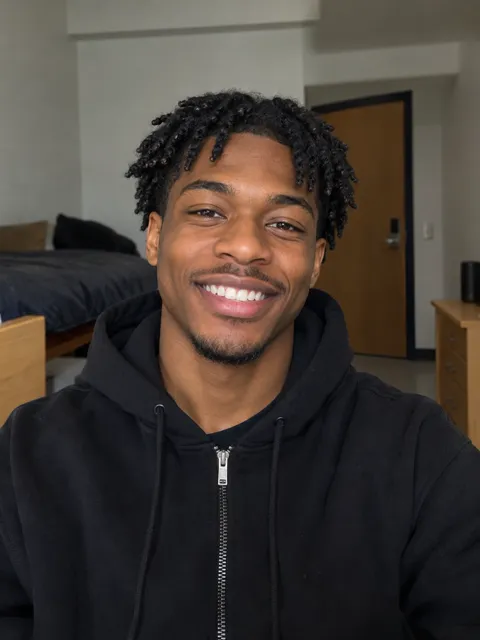
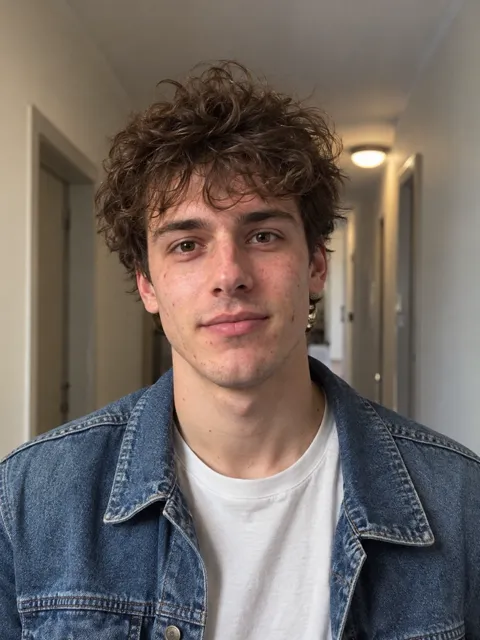
Selfie of a smiling young Black man with short twists in a black hoodieSelfie of a young man with curly brown hair in a denim jacket

Hotel Lobby AI

Two selfies, one orange wall, four lines about owning the lobby.

  1. Checked in late but we still own the lobby!
  2. Fresh fit, fresh flow, yeah we run this hobby!
  3. Two mics up and the whole floor shaking!
  4. Orange room legends, look at the moves we making!

How we tested

Every clip was 12 seconds or shorter and vertical, made from synthetic portraits (never a customer's photo) on an orange stage. We ran three rounds: 8 renders on the first model, 6 more on the same model, then 5 on the model we use today. Within a round we changed one thing at a time.

We checked each clip three ways. A speech-to-text pass compared the sung words with the script. Frames sampled every half second showed the framing, the microphones and whose mouth was moving. And we measured beat coverage: the share of half-second windows where the drums and bass are clearly audible under the vocals. 1.0 means the beat never drops out; below 0.3 means it is mostly gone while people rap.

1. Start the beat before the first word

Left to itself, the model treated the opening as an a cappella intro and brought the drums in only when the second rapper took over. Two changes fixed it: describe the music first in the prompt, with the full drum kit playing from 0:00 and no build-up, and give the first second to the beat alone, with both performers nodding, mouths closed. In our first round the share of audio in the bass range rose from 0.04 to 0.31 with those two lines.

Mention the beat again in every time slot ("over the same beat"). One render where we reworded just the handoff sentence and the camera line lost the beat almost entirely, which is also the best argument for re-testing every prompt change, however small.

2. Write the exact lines in quotes

A prompt that gave only a topic ("they rap about a birthday") was the worst render of the first round, with almost no beat (0.05 in the bass range). With every line written out in quotes and given a time slot, the models were remarkably reliable. In all 11 renders of the last two rounds, every scripted line was sung as written. In the first of those rounds, each handoff also landed on the second we asked for.

  • Budget about 3.5 words per second. In a 12-second clip that is nine words or fewer per line.
  • Say who is rapping and that the other person keeps their mouth closed, or both mouths move on every line.
  • Avoid violent words, even as music jargon. A common term for a short horn hit was refused twice by moderation because it contains one.

3. Hand the microphone over fewer times

This was the biggest surprise. With four alternating lines (three handoffs), the first model often turned the song into stop-time: the bass vanished under the vocals and only hit in the gaps between rappers. Describing the beat more forcefully did not help. Cutting to two verses, one handoff, did.

Structure (first model, 480p)RendersBeat coverage
Four alternating lines, original wording1about 0.7
Four lines, a specific bass pattern per slot10.27
Four lines, stop-time forbidden in words10.18
Two verses, one handoff20.77 and 0.50

On the model we use today, four lines held 0.45 to 0.50, while two verses with ad-libs and a short finale sung together reached 0.86, the best of any test. Our ai rap video generator still offers four lines, because people want room for more jokes, but each line is capped at nine words and any line can go to both of you.

4. The first sentence decides the framing

Two renders with the same seed differed only in a camera move we added near the end of the prompt. They came out almost frame for frame the same: the late instruction was ignored. Meanwhile a different prompt that opened on full-body framing gave a completely different clip. So in the next render we moved the camera plan into the opening sentence, and it was followed.

  • Chest-up: big faces and clean lip sync, but no body movement reads.
  • Knees-up: the bounce, the shoulders and the hand gestures show, and faces stay clear. A good default.
  • One continuous take written into the opening sentence (full body, push in for the verses, ease wider for the finale): the model followed all three stages, with feet and microphone stands on the floor. The cost is smaller faces at the start.
  • If the camera creeps in uninvited, telling it to stay still is not enough. Saying the performers stay rooted and never step toward the camera, then trying a new seed, fixed it in our demos.

A plain wall with no ceiling or corners in view also helped: a patterned ceiling stole attention in one render, and the clean wall gave larger faces in the next. You can see the result on the Hotel Lobby AI page, which uses that stage.

5. Ad-libs need a timed line and a gap

A short "Let's go!" from the listening rapper makes a duo feel alive. Describing it as behavior ("the other one hypes them up") produced nothing in two renders out of two. It worked once we wrote the ad-lib into the timeline as its own quoted line and left room for it: in a 12-second clip with two verses and a finale, "Let's go" landed at 4.2 seconds and "That's right" at 7.6, both in the gaps. With four nine-word lines there was no gap, and no ad-lib appeared.

An AI rap video prompt outline that follows these rules

  1. Overview and framing

    One sentence: length, vertical, two performers on a named stage, and the full camera plan (for example knees-up and steady, or full body pushing in to knees-up).

  2. Music

    Genre and tempo, full drum kit and bass from 0:00 to the end, no a cappella intro, no build-up, beat as loud as the vocals.

  3. Who is who

    Left and right performer, one clothing detail each, a distinct voice for each, and one microphone each (or one shared microphone if they stand close).

  4. Timeline

    0:00 to 0:01 beat only. Then each slot: who raps, the exact line in quotes, what the other one does, and any ad-lib as its own quoted line in a gap.

  5. Ending and limits

    How it ends (a shared final word, a look at each other), then: no on-screen text, no subtitles, no logos, no morphing.

Or skip the prompt entirely: on our generator you upload two photos, pick a stage, and edit four lines; the prompt above is built for you. Finished clips are on the examples page.

What these tests do not show

  • Each row is one render. AI video varies from run to run, so a single good or bad result can mislead.
  • We tested one pair of synthetic faces on one stage. Pets, groups of three and other stages may behave differently.
  • Two models were tested, and models update often, so results may shift with new versions.

Making one costs 10 credits at 720p and 5 at 480p, and writing and editing lyrics is free; see pricing.

FAQ

The framing and camera plan in the first sentence, the music with the beat starting at 0:00, who is left and right, a timeline with each line in quotes, and an ending. Keep lines to about nine words in a 12-second clip.
In our tests it happened most when the rappers swapped often. Four alternating lines often dropped the bass under the vocals; two verses with one handoff kept it.
About 3.5 words per second worked in our tests: nine words or fewer per line, with the first second left for the beat.
Yes, if the ad-lib is written into the timeline as its own quoted line and there is a gap between lines for it. Described only as behavior, it never appeared in our tests.

What's new on this page

  • Published with results from 19 test renders.

Make your AI rap video

Two photos and four lines. You only pay once the lyrics are right.